Horgan and Delia Guardia's Party Primary Contest
Presumed InnocentRaymond Horgan’s primary contest with Nico Delia Guardia tests the authority of an incumbent who has dominated Kindle County politics for more than a decade and exposes the gap between campaign promises and the limits of local law enforcement. As Nico turns Carolyn Polhemus’s murder into an indictment of Horgan’s administration, Horgan’s faltering campaign loses momentum; when a late poll confirms the danger, the contest becomes not only a fight for office but a reckoning with what political victory can change.
Background and Stakes
Horgan’s decision to run again comes after a period of personal and political decline. Twenty months after separating from his wife of thirty years, Ann, he has gained weight and acquired a persistent grimness. Observers had doubted that he had the stamina or desire to seek another term, and he waited until four months before the primary to announce. Rusty Sabich believes the strongest impetus was Horgan’s outright hatred of Nico, once a deputy prosecuting attorney in their office. Other people attribute the decision to Horgan’s attachment to power and public life; the evidence leaves the mixture of motives unresolved.
The stakes are unusually high because Kindle County is effectively a one-party town: victory in the primary is tantamount to election. Horgan has held the confidence of the county’s one and a half million registered voters for more than a decade, but he has not secured the party endorsement, partly because of a longstanding factional dispute with the mayor. His political allies expect public polling to pressure party leaders into changing the mayor’s position. That expectation makes the campaign’s eventual numbers especially consequential: they will measure not just the candidates’ standing with voters but whether the party can still rally behind its incumbent.
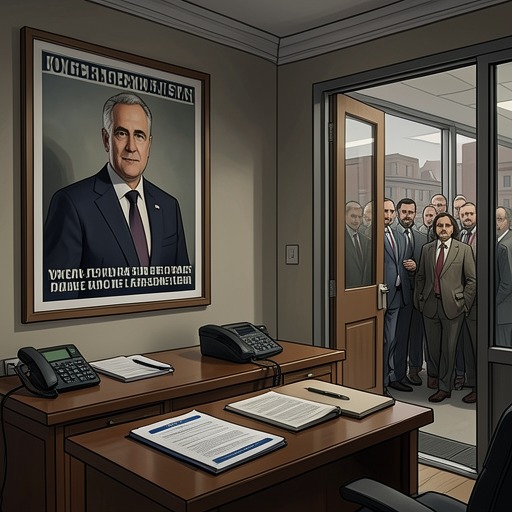
Horgan’s campaign has struggled to present a convincing public image. While its money lasted, agencies and media consultants worked on his behalf; three young consultants shaped a campaign photograph that appeared on the backs of one in every four city buses. The image gave Horgan a coaxed, supposedly wry smile, but Rusty thought it made him look foolish and out of step. The polished surface could not conceal the worn candidate Rusty saw in person, or reverse the accumulating impression that events were passing Horgan by.
Attacks and the Murder Case
Nico makes law enforcement the central charge against Horgan. In public remarks, he portrays the prosecuting attorney’s relaxed approach over twelve years as complicity with the city’s criminal elements and presents Carolyn’s death as evidence that even members of Horgan’s own staff are unsafe. The charge is politically forceful, but it has an evident omission: Nico himself entered the office as Horgan’s deputy more than a decade earlier. As Rusty observes, Nico does not explain how his own hiring fits the story he tells about Horgan’s administration.
The candidates’ conflict also has a personal history. Rusty first met Nico when they shared an office as new deputies. Years later, Rusty, then chief deputy, fired him after Nico began openly trying to drive Horgan from office. Nico had pursued a murder prosecution of an abortionist on a theory Rusty considered legally unsound, while cultivating interest-group support, placing stories about his disagreements with Horgan, and making jury arguments that doubled as campaign speeches. Horgan left the firing to Rusty. Their former colleague’s move from office politics to electoral opposition thus carries the force of a rupture inside the prosecuting attorney’s own organization.
Carolyn’s murder gives Nico’s attacks an immediate and emotionally charged focus. When Nico suggests that Horgan must be pressing hard on the case, Rusty replies that Horgan presses hard on every case. Nico answers by portraying him as tired and no longer tough enough to lead. Rusty’s own unplanned description of Carolyn as splendid briefly interrupts the political exchange with personal feeling, making the case’s emotional weight visible even as the candidates convert it into campaign material. In Rusty’s assessment, Nico has been relentless and exploitative in his public treatment of the death; Horgan, meanwhile, tells Rusty to keep the investigation direct and find a perpetrator rather than anticipate the homicide investigators.
The Poll and Horgan’s Recognition
With eight days remaining in the campaign, Raymond presents Rusty with the Channel 3–Tribune poll showing Nico ahead. The figures are 43 percent for Nico, 39 percent for Horgan, and 18 percent undecided. Rusty initially dismisses the result and points out that the undecided voters leave Horgan a route back. Horgan counters that an incumbent can lose support once voters see that a challenger has a real chance. In a primary, he believes, the new face can be decisive.
The campaign’s own numbers are worse than the public poll. Horgan says they are poor, and the campaign has lacked the money to conduct a strong polling operation. The national outfit’s results contradict the more hopeful impressions held by Horgan and his political circle, including Larren Lyttle. The murder case has hurt, Horgan acknowledges, but he identifies a broader loss of momentum as the deeper problem. The poll does not create the decline so much as make it undeniable: the incumbent can no longer treat his allies’ confidence as a substitute for evidence.
Horgan then tells Rusty that they are going to lose. For Rusty, the admission comes from the worn face and composed posture of the man he had regarded as an idol and leader. Twelve and a half years after Horgan began speaking about revolutionizing law enforcement, he has finally stopped trying to hold the office. His recognition is a decisive turn in the contest: the campaign shifts from the possibility of recovery to the acceptance that someone else will have the next term.
Consequences and Political Meaning
Horgan’s retreat does not amount to an endorsement of Nico’s promises. Rusty considers the conditions that will survive the change in leadership: too many crimes, too few jails and courtrooms, too few lawyers, political demands for favors, and a justice system burdened by judges whose appointments may reflect party loyalty rather than ability. He expects these pressures to confront Nico’s administration regardless of its campaign rhetoric. In this view, the candidates disagree over leadership and blame, but neither can simply will away the institutional scarcity that shapes prosecution.
The primary therefore exposes both the force and the limits of political competition. Nico can turn Horgan’s record and Carolyn’s murder into effective attacks; Horgan’s experience and incumbent status cannot protect him once the numbers and momentum turn against him. Yet the anticipated transfer of office promises no clean break with the problems used to win it. Rusty’s account ends the episode not with a declared election result, but with Horgan’s acceptance of defeat and the recognition that the machinery of local justice will remain, in important respects, unchanged.